Breed comparison
Shiba Inu vs Korean Jindo
Two ancient East Asian spitz breeds that share an aloof, loyal, high-prey-drive character. Here is the honest comparison of size, temperament and availability in Singapore, from an AVS licensed shop that places Shibas.
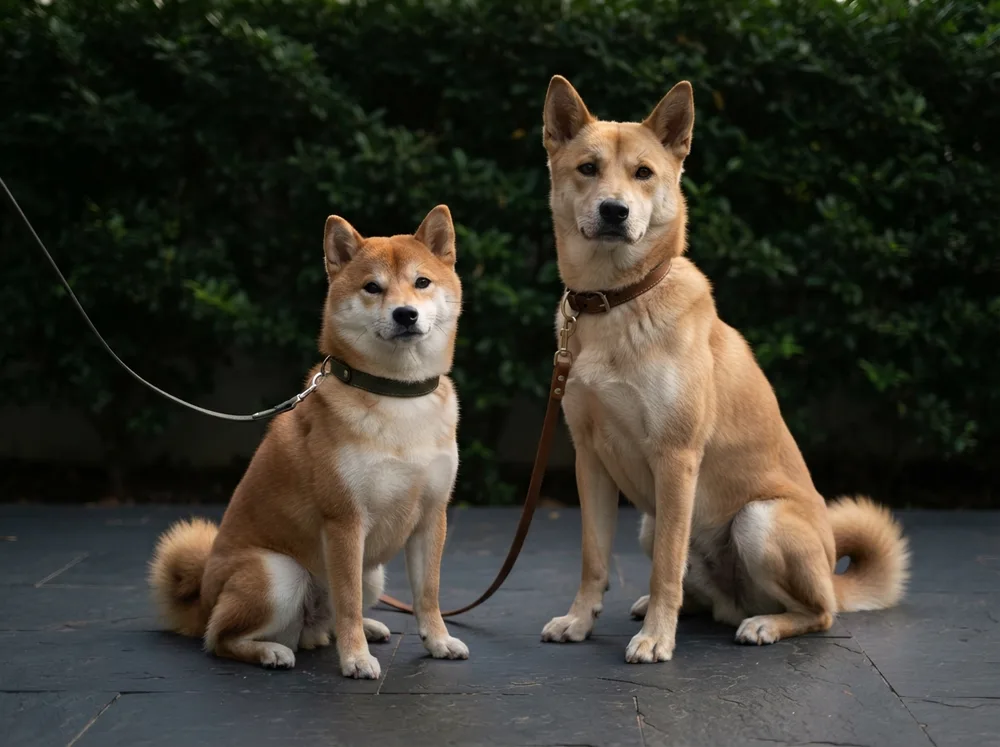
What is the difference between a Shiba Inu and a Korean Jindo?
Both are ancient East Asian spitz-type hunting dogs, aloof, loyal, clean and high in prey drive, so they share a lot of character. The differences: the Shiba Inu is Japanese and small-to-medium (8 to 11 kg); the Korean Jindo is larger (15 to 23 kg), even more independent and famously one-person loyal, and is rare in Singapore. Neither is HDB-approved, and both need experienced, on-leash handling.
Two primitive spitz-types · one is available here
Two primitive spitz-types, one better known here
The Shiba Inu and the Korean Jindo are cousins in temperament if not in nationality. Both are ancient, natural, spitz-type hunting breeds, and both share the hallmark traits: aloofness, intense loyalty, fastidious cleanliness, strong prey drive and a deep independent streak. If you have researched Shibas and keep bumping into the Jindo, that is why.
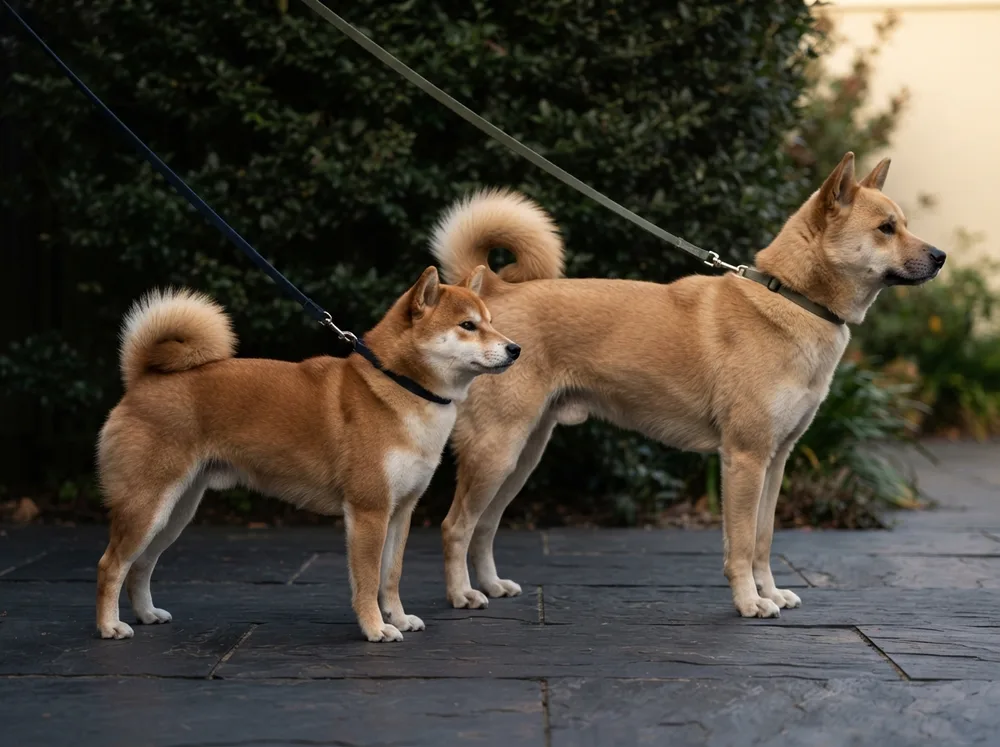
The practical differences are size, availability and intensity. The Shiba is smaller and far more available in Singapore; the Jindo is larger, rarer here, and often described as even more independent and single-mindedly devoted to one person. Neither is on HDB's approved list, covered on the HDB page.
8–11 kg
Shiba weight
15–23 kg
Jindo weight
High
Prey drive (both)
Neither
HDB approved
Temperament and handling
Both breeds are for experienced owners who genuinely appreciate an independent dog. The Jindo is often described as even more aloof than the Shiba and intensely bonded to one person, with a strong homing and hunting instinct and a reputation for being an escape artist. The Shiba is similar in kind but a little more moderate, and much more established as a companion in urban Asia.
For either breed, the rules are the same: early socialisation, secure containment, on-leash always because of the prey drive, and patient, respectful, positive training. The Shiba's honest temperament profile, which broadly maps onto the Jindo, is on the temperament page.
Shared traits, key differences
- Both: aloof, clean, loyal, high prey drive, on-leash only
- Shiba: Japanese, ~8–11 kg, widely available here
- Jindo: Korean, ~15–23 kg, rare in Singapore
- Jindo: even more independent, often one-person loyal
- Both: experienced owners, secure containment
Which is the practical choice in Singapore?
For nearly all Singapore buyers, the Shiba is the practical option, simply because it is available, better established as a companion, and smaller. Genuine, well-bred Jindos are hard to find here, and the breed's size and intensity make it a niche choice for a very specific owner.
If it is the aloof, dignified, primitive-spitz character you are drawn to, the Shiba delivers it at a manageable size, and it is the breed we place. The breed guide is on what is a Shiba Inu.
The short version
Love the independent primitive-spitz character but want an available, apartment-scaled (private-property) companion? The Shiba is the realistic choice in Singapore.
Keep comparing
Frequently asked questions
What is the difference between a Shiba Inu and a Jindo?
Both are aloof, loyal, high-prey-drive spitz-type hunting breeds. The Shiba is Japanese and smaller (8 to 11 kg); the Korean Jindo is larger (15 to 23 kg), even more independent and one-person loyal, and rare in Singapore.
Is a Jindo bigger than a Shiba Inu?
Yes. A Jindo typically weighs 15 to 23 kg, noticeably larger than the Shiba’s 8 to 11 kg, and stands taller. Both are compact, athletic spitz-types.
Are Jindos and Shiba Inus similar in temperament?
Very. Both are aloof, clean, intensely loyal, independent and high in prey drive, and both must be kept on-leash. The Jindo is often described as even more independent and single-person devoted.
Can you get a Jindo in Singapore?
Well-bred Jindos are rare in Singapore, which is one reason most buyers drawn to the primitive-spitz character choose the more available Shiba Inu instead. Neither breed is HDB-approved.
Meet your Shiba Inu
Come say hello at Balestier
2 Balestier Road #01-701, Singapore 320002 · Weekdays 12pm–6pm · Weekends 10am–6pm. Or message us first: tell us about your home and whether you have researched the scream, the prey drive and the shedding, and we will tell you honestly if a Shiba fits.
Drawn to the independent character?
The Shiba delivers it at a manageable size. Tell us what you are looking for.
See available puppies