Breed truth, unspun
The honest truth about Shiba Inu temperament
Aloof, cat-like and independent, with a high prey drive, an unreliable recall and a famous scream. Here is what living with a Shiba is actually like, sourced from breed authorities and owners, by an AVS licensed shop that would rather match you than sell you.
Nelson and Kim, Curious Tails · AVS licence AS24J00046
What is a Shiba Inu’s temperament like?
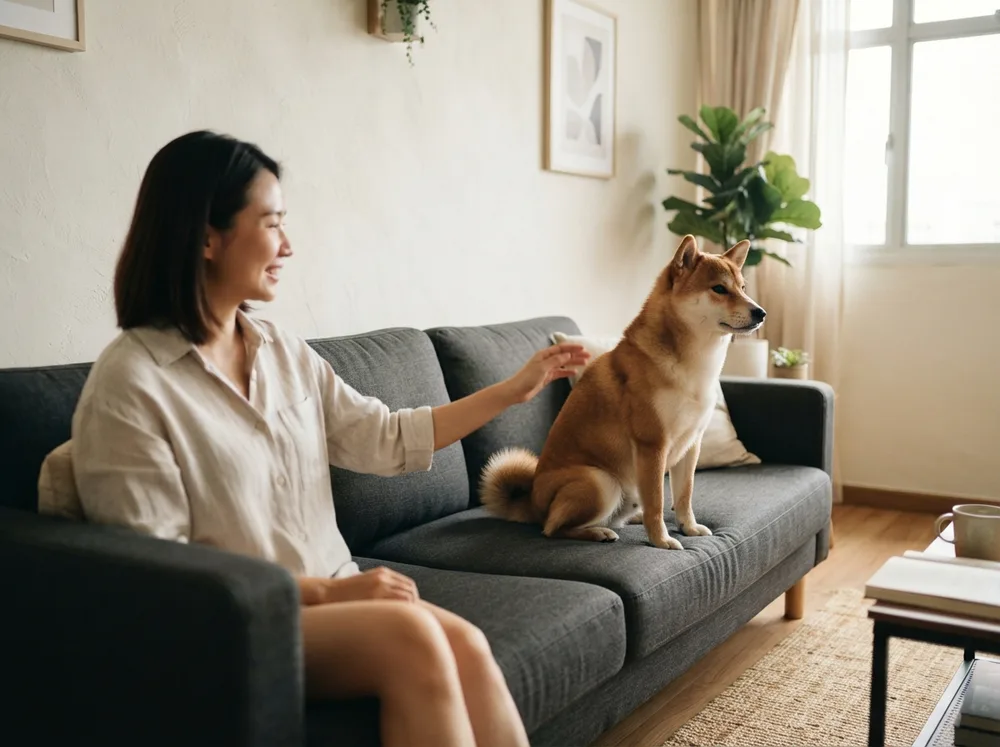
Breed authorities and owners widely describe the Shiba Inu as alert, bold, aloof and cat-like: independent, dignified, clean and often not interested in cuddling. It bonds strongly with its family on its own terms. Expect a strong prey drive, an unreliable recall (so never off-leash), a stubborn streak, and the dramatic Shiba scream. It is a wonderful dog for the right owner, and a poor match for anyone expecting the cuddly meme.
Aloof · vocal · high prey drive · never off-leash
The honest headline: a cat the internet calls a dog
If you take one thing from this page, take this: the Shiba Inu is widely described as cat-like, and that is not a cute marketing line, it is the single most useful predictor of what living with one is like. The Shiba is independent, self-possessed, fastidiously clean, and affectionate strictly on its own schedule. The American Kennel Club and Royal Canin both describe a bold, alert, spirited breed with a strong independent streak.
The Doge meme sold the opposite: an agreeable, huggable internet dog. The gap between that image and the real animal is why so many Shibas are rehomed, and it is why we spend more time managing expectations than we do talking price. Everything below is the reality, sourced and unspun.
Aloof
Cat-like, independent
High
Prey drive
Never
Off-leash
The scream
A real thing
Are Shiba Inus affectionate, or aloof?
Both, in a specific way. A Shiba typically bonds deeply with one or two people and is loyal and attentive, but it shows it with proximity and presence rather than lap-sitting and face-licking. Many owners describe a dog that wants to be in the same room but not on the same cushion. If your idea of a dog is a velcro companion who craves constant cuddles, the Shiba will quietly disappoint you.
This is the meme-versus-reality core, and it is neither a flaw nor a warning, just a fit question. People who love Shibas love exactly this dignified independence. We wrote a whole piece on it: are Shiba Inus affectionate, or just aloof?
Affection, Shiba-style
- Bonds deeply, usually with one or two people
- Shows love by presence, not constant cuddling
- Often dislikes being hugged or restrained
- Independent and content with its own company
- Wrong dog for anyone wanting a velcro lapdog
Do Shiba Inus bark a lot? And what is the Shiba scream?
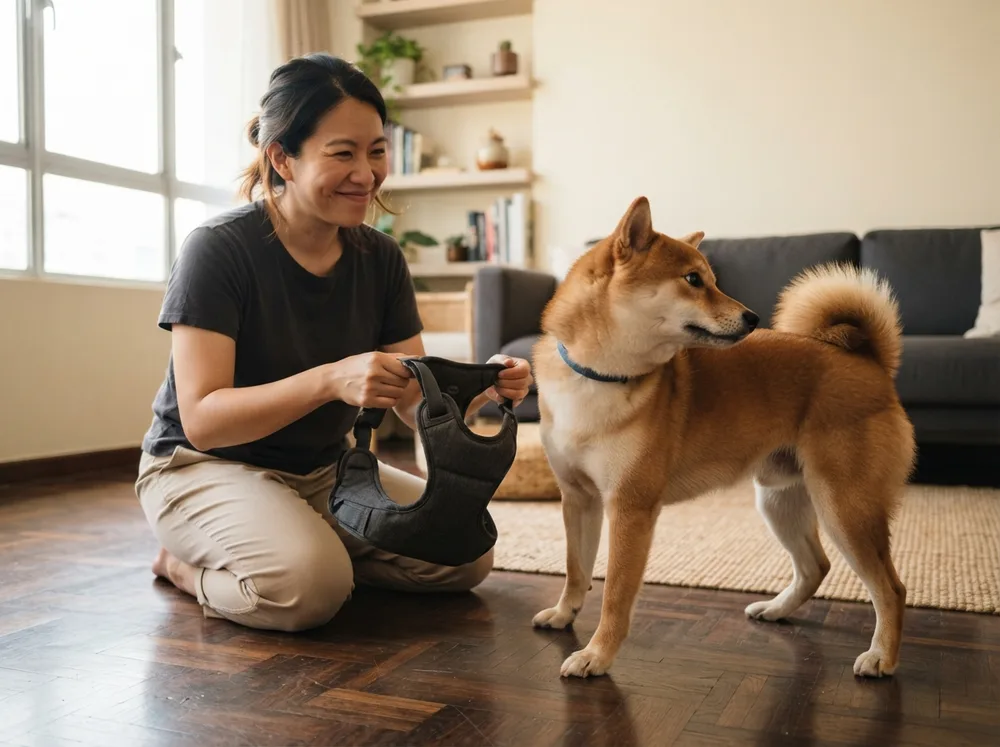
Shibas are not typically nuisance barkers; they tend to be fairly quiet day to day. But they are famously vocal in another way: the Shiba scream, a loud, high, almost human wail the breed lets out when it strongly objects to something, classically a nail trim, a bath, a harness, or being restrained. It is well documented across owner communities and breed media, and first-time owners are routinely startled by how dramatic it is.
In a landed home this is a quirk. In a flat with shared walls, it is worth thinking hard about, and it is one more reason the Shiba's housing situation is not a detail. There is a dedicated explainer at what is the Shiba Inu scream.
The scream is real, and loud
It is not aggression and not pain, it is protest. But it is genuinely loud, so factor it in if you have close neighbours, and introduce nail trims and handling early and positively.
Prey drive and the never-off-leash rule
The Shiba was bred to hunt small game, and that instinct is fully intact. It is widely reported to have a high prey drive, which means squirrels, cats, birds and small pets can trigger an instant, focused chase. Combined with a recall that owners and trainers describe as unreliable at best, this produces the one rule we will not soften: a Shiba is never off-leash in an unsecured space.
This is not us being cautious for legal reasons. It is the consistent, near-unanimous position of breed clubs, trainers and owner communities, and the reason "my Shiba slipped the lead" stories so often end badly. Ours is a secure-harness, on-leash breed, and if you have free-roaming cats at home, that prey drive is a serious compatibility question, not a footnote. More at why you never let a Shiba off-leash.
An off-leash Shiba is a lost or injured Shiba. We say it before the sale, every time.
Are Shiba Inus stubborn? Can you train them?
Yes and yes, in that order. The Shiba is intelligent and learns quickly, but it is independent enough to weigh up whether your request is worth its time, which reads as stubbornness. It is not a breed that lives to please you, and heavy-handed or repetitive drilling backfires badly. What works is short, positive, motivating sessions, and a sense of humour about the days it decides not to cooperate.
Housetraining is usually faster than the temperament suggests, because Shibas are naturally clean, but recall and impulse control are lifelong projects rather than solved problems. Every puppy we place comes with a free lesson with an AVS-certified trainer aimed squarely at this, and there is a realistic guide at how to train a stubborn Shiba.
Training a Shiba
- Intelligent, learns fast, chooses when to comply
- Positive, short, motivating sessions only
- Harsh or repetitive methods backfire
- Naturally clean; housetraining is often quick
- Recall stays a lifelong management task
Is a Shiba Inu a good family dog?
It can be, for the right family. A Shiba generally does well with respectful, older children who understand not to grab, hug or disturb a dog that is eating or resting. It is a less natural fit for homes with toddlers, or with free-roaming cats and small animals, because of the handling sensitivity and the prey drive.
The honest summary: a Shiba suits an active, patient household that wants a clean, dignified, independent companion, ideally in private property and always on-leash, and that has genuinely absorbed the shedding and the scream in advance. It is a poor match for anyone wanting a low-effort, cuddly, off-leash family dog. There is a fuller answer at are Shiba Inus good with children.
Best-fit household
Active, patient, private property, older or no children, no free-roaming small pets, and eyes fully open about the coat and the noise. If that is you, a Shiba can be a superb companion.
What are the disadvantages of a Shiba Inu?
Since this is the question people actually type, here is the straight list. Beyond the aloofness, the scream, the prey drive and the never-off-leash rule already covered, Shibas can be same-sex dog-aggressive and are often not dog-park dogs; they are escape artists, so containment must be genuinely secure; they can be possessive over food, toys and space; and they shed heavily, blowing their undercoat about twice a year.
None of this makes the Shiba a bad dog. It makes it a high-commitment dog that rewards a prepared owner and punishes an impulse buy. We would far rather you read this list and decide it is not for you than discover it in month three. If it still sounds like your kind of dog, it very likely is.
The honest disadvantages
- Aloof and independent, not a cuddly lapdog
- The Shiba scream; can be reactive when handled
- High prey drive; unreliable recall; never off-leash
- Can be same-sex dog-aggressive; an escape artist
- Possessive tendencies; heavy seasonal shedding
Go deeper on the honest bits
Frequently asked questions
What are the disadvantages of a Shiba Inu?
They are aloof rather than cuddly, have a high prey drive and unreliable recall (so never off-leash), produce the loud Shiba scream, can be same-sex dog-aggressive, are escape artists, can be possessive, and shed heavily twice a year. It is a high-commitment breed, not an easy first dog.
Do Shiba Inus bark a lot?
Not usually as everyday barking; they tend to be fairly quiet. But they produce the Shiba scream, a loud, dramatic protest vocalisation when they object to things like nail trims or the harness, which is worth understanding if you have close neighbours.
Are Shiba Inus affectionate?
Yes, but on their own terms. A Shiba typically bonds deeply with one or two people and shows loyalty through presence rather than constant cuddling. If you want a velcro lapdog, the aloof, cat-like Shiba will likely disappoint you.
Is a Shiba Inu a good family dog?
It can be for an active, patient family with respectful older children, ideally in private property. It is a weaker fit for homes with toddlers or free-roaming cats and small pets, due to handling sensitivity and a high prey drive.
Can you train a Shiba Inu?
Yes, with patience. Shibas are intelligent but independent and stubborn, so short, positive, motivating sessions work while harsh or repetitive methods backfire. Housetraining is often quick, but recall stays a lifelong management task, which is why an off-leash Shiba is never advised.
Are Shiba Inus aggressive?
Not typically toward people, but they can be same-sex dog-aggressive and possessive over food, toys and space. Early socialisation, respectful handling and secure containment matter, and they are often not suited to off-leash dog parks.
Meet your Shiba Inu
Come say hello at Balestier
2 Balestier Road #01-701, Singapore 320002 · Weekdays 12pm–6pm · Weekends 10am–6pm. Or message us first: tell us about your home and whether you have researched the scream, the prey drive and the shedding, and we will tell you honestly if a Shiba fits.
Sounds like your kind of dog?
If the aloof, independent Shiba appeals rather than worries you, you are exactly the owner these dogs need.
See available puppies