Culture & the meme
The Shiba Inu's Japanese heritage
柴犬, the brushwood dog: an ancient Japanese mountain hunter, one of six native breeds, that survived near-extinction to become a global icon. Here is where the Shiba really comes from, and why it still matters.
Nelson and Kim, Curious Tails · AVS licence AS24J00046
Where does the Shiba Inu come from?
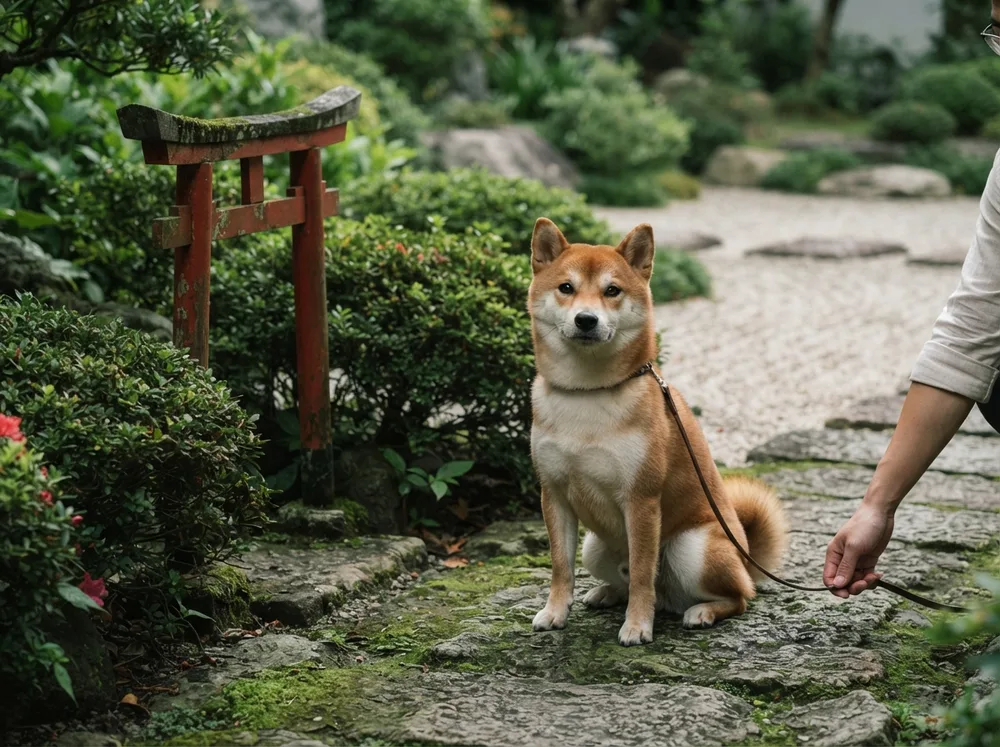
The Shiba Inu is an ancient native Japanese breed, written 柴犬 and usually read as "brushwood dog". It was developed to flush birds and small game in Japan's mountains and is the smallest of Japan's six native breeds. It nearly went extinct in the 1940s due to distemper and the second world war, and today's Shibas descend from a handful of surviving bloodlines that were carefully rebuilt.
柴犬 · six native breeds · a survivor
柴犬: the brushwood dog
The name Shiba Inu is written 柴犬. "Inu" means dog; "shiba" is usually understood as "brushwood", either for the brushwood-covered hills the breed hunted in, or for the way its red coat echoes the colour of autumn brushwood, with some also linking the word to an old sense of "small". Whichever reading you prefer, it points at the same dog: a small, agile hunter of the Japanese hills.
The Shiba is the smallest of Japan's six native dog breeds, a group that also includes the much larger Akita, and the mid-sized Kishu, Shikoku, Kai and Hokkaido. That family resemblance is why the Shiba and Akita get confused, which we untangle on Shiba vs Akita.
A breed that almost disappeared
The Shiba's history is genuinely dramatic. By the 1940s a combination of a distemper epidemic and the deprivations of the second world war brought the breed to the edge of extinction. The Shibas alive today descend from a small number of surviving regional bloodlines that dedicated enthusiasts carefully bred back up, which is part of why lineage and provenance carry real weight for the breed.
It is also why provenance still matters when you buy one. A Shiba from a licensed source with health records and a microchip is traceable; a suspiciously cheap listing with no paperwork is not. The checks are on how to spot a scam Shiba Inu.
Heritage in brief
- 柴犬 — the "brushwood dog"
- Bred to flush birds and small game in the mountains
- Smallest of Japan’s six native breeds
- Near-extinct in the 1940s (distemper + WWII)
- Rebuilt from a few surviving bloodlines
From mountain hunter to global icon
The hunting heritage never really left the modern Shiba, and it explains the dog you actually live with: the alertness, the independence, the prey drive and the self-reliance are all working-dog traits, not quirks. Understanding that the Shiba is a repurposed hunter, not a bred-for-the-sofa companion, is the key to living happily with one, which is the heart of the temperament page.
In the last decade the Shiba has gone from a Japanese national treasure, it is designated a natural monument in Japan, to a global internet icon via the Doge meme, a journey we tell on Doge and Cheems. Same dog, wildly different fame.
Keep reading
Frequently asked questions
What does Shiba Inu mean in Japanese?
Shiba Inu is written 柴犬. "Inu" means dog and "shiba" is usually understood as "brushwood", referring to the terrain it hunted in or the colour of its coat, so it is often translated as "brushwood dog".
Where do Shiba Inus originally come from?
Japan. The Shiba is an ancient native Japanese breed developed to flush birds and small game in the mountains, and it is the smallest of Japan’s six native dog breeds.
Did the Shiba Inu nearly go extinct?
Yes. By the 1940s, distemper and the second world war brought the breed close to extinction. Today’s Shibas descend from a small number of surviving bloodlines that were carefully rebuilt.
Is the Shiba Inu related to the Akita?
They are both native Japanese breeds and share a spitz appearance, but they are separate breeds. The Akita is much larger. The Shiba is the smallest of Japan’s six native breeds.
Meet your Shiba Inu
Come say hello at Balestier
2 Balestier Road #01-701, Singapore 320002 · Weekdays 12pm–6pm · Weekends 10am–6pm. Or message us first: tell us about your home and whether you have researched the scream, the prey drive and the shedding, and we will tell you honestly if a Shiba fits.
Drawn to the breed’s story?
We place locally-bred Shibas at our Balestier shop. Come and meet one in person.
See available puppies